
Chef training
Professional Culinary Training in Thailand for International Students
Nov
Thailand has long been celebrated as one of the world’s great culinary destinations, but in recent years it has also become a serious hub for culinary training in Thailand for international students. Beyond the street-food stalls and Michelin-starred restaurants of Bangkok lies a growing ecosystem of professional cooking schools that welcome aspiring chefs from every corner of the globe. For anyone considering a study cooking abroad Thailand experience, Bangkok offers an unmatched combination of authentic ingredients, expert instructors, and immersive cultural learning—all delivered in English, so language is never a barrier to mastering the wok.
Why Thailand Has Become a Global Culinary Training Destination
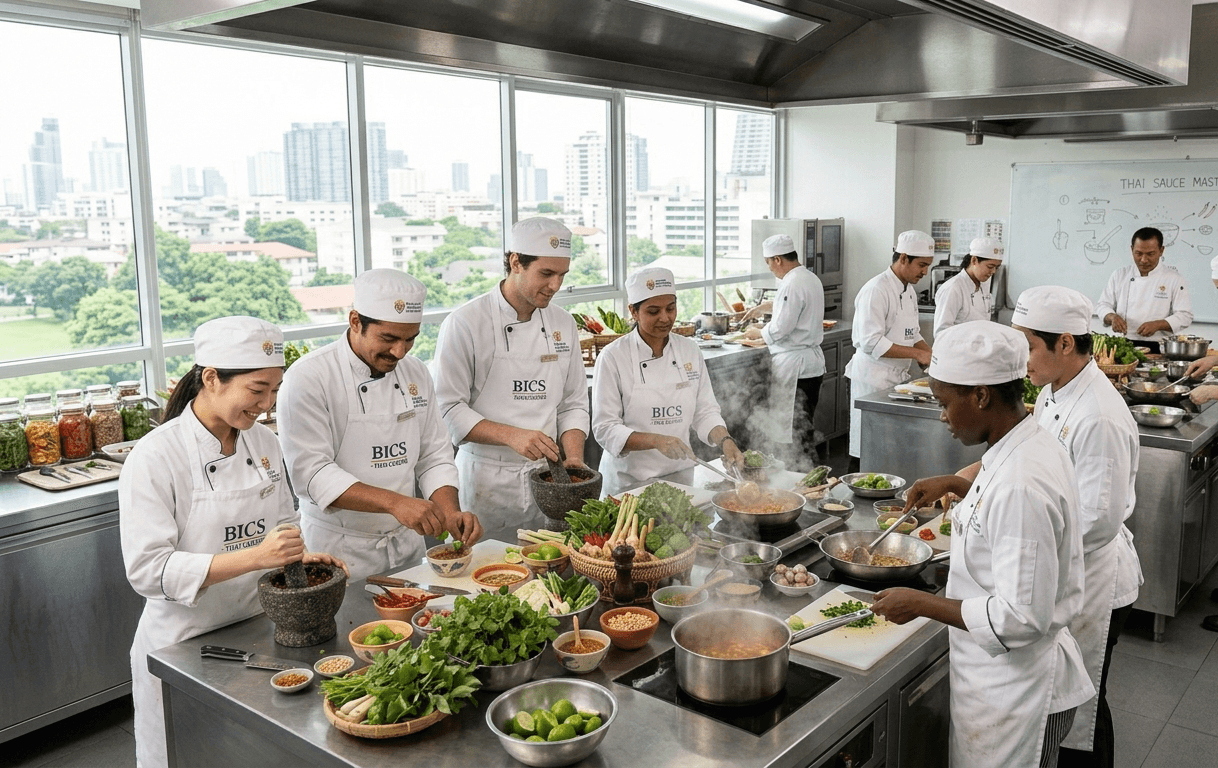
Thai cuisine is built on centuries of regional tradition, from the fiery curries of the South to the herbal broths of the North. This diversity, combined with Bangkok’s status as the country’s culinary capital, makes it an ideal classroom for anyone serious about professional cooking. Schools such as Bangkok Thai Cooking Academy have built long-running programs specifically designed around this advantage, offering professional chef courses that run over a rotating schedule and can be studied for as little as one week or as long as eight weeks. Students who commit to the longer track can expect to learn an extraordinary volume of dishes—around 40 professional Thai dishes each week, giving international students a depth of repertoire that is difficult to replicate elsewhere.
A Hands-On, Not Just Theoretical, Approach
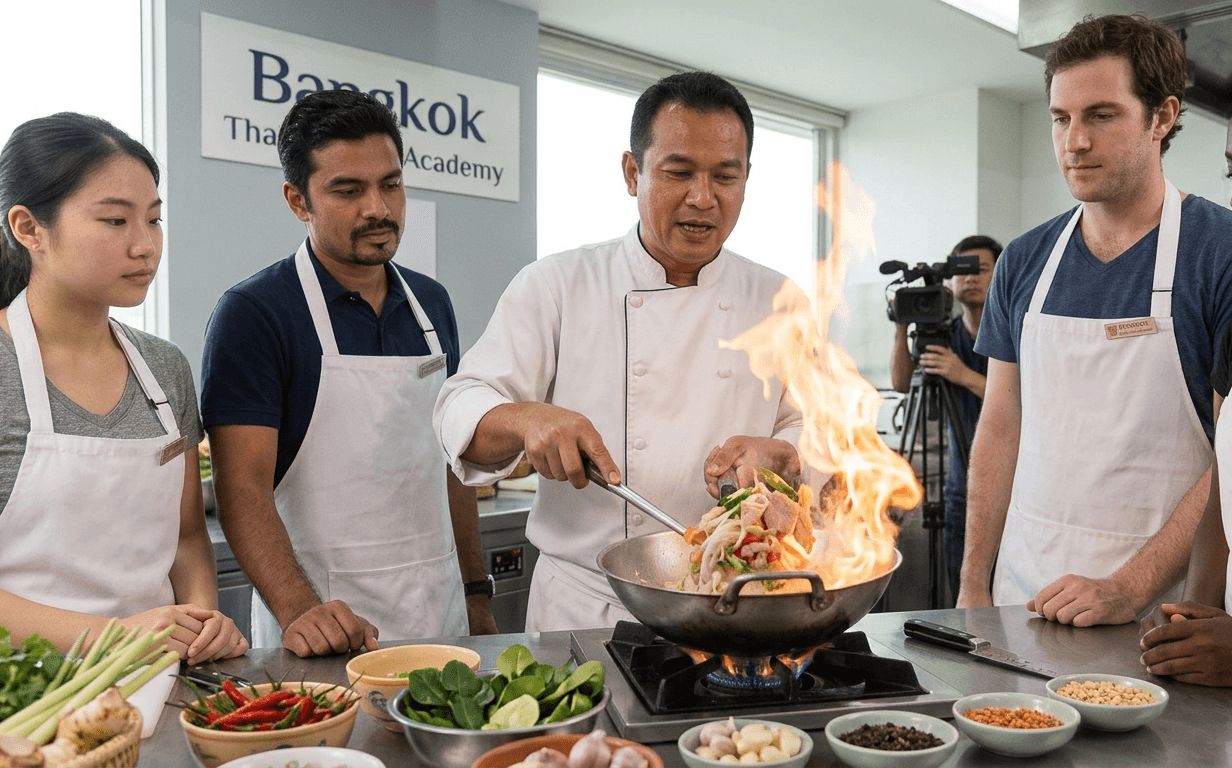
What sets Thai culinary training apart is its emphasis on repetition and correction rather than passive observation. Instructors first demonstrate each dish, then students independently recreate it before receiving feedback on how to improve. This “cook, critique, refine” cycle mirrors the rhythm of a professional kitchen and builds muscle memory far faster than lecture-based learning.
English Instruction: Removing the Language Barrier
One of the biggest concerns for international students is whether they can follow technical instruction in a foreign country. In Thailand’s leading cooking academies, this is rarely an issue. Classes are conducted entirely in English, allowing students from Europe, the Americas, Australia, and Asia to learn side by side without translation gaps. Instruction is delivered with clear English guidance from expert local chefs inside professional culinary academies, ensuring that nuanced techniques—like balancing the sweet, sour, salty, and spicy notes central to Thai cooking—are communicated precisely.
Foreign Student Support and Study-Abroad Logistics
Choosing to study cooking abroad involves more than just the curriculum; accommodation, visas, and daily logistics matter just as much. Thai culinary schools have adapted to this reality. Programs running from one to eight weeks often include accommodations for foreign students, with diplomas awarded upon successful completion. For those wanting a longer, immersive stay, a six-month education visa option allows students to combine extended study with practical experience, and students enrolled for six weeks or more may also access internships at Thai hotels, resorts, and restaurants—a valuable bridge between classroom training and real-world employment.
For students weighing multiple study-abroad destinations, accreditation matters. Worldchefs-approved courses signal that a program meets internationally benchmarked culinary standards, giving graduates a credential recognized well beyond Thailand’s borders. This is particularly reassuring for career-focused students who want their time abroad to translate into professional advantage, not just a memorable holiday.
Cultural Immersion as Part of the Curriculum
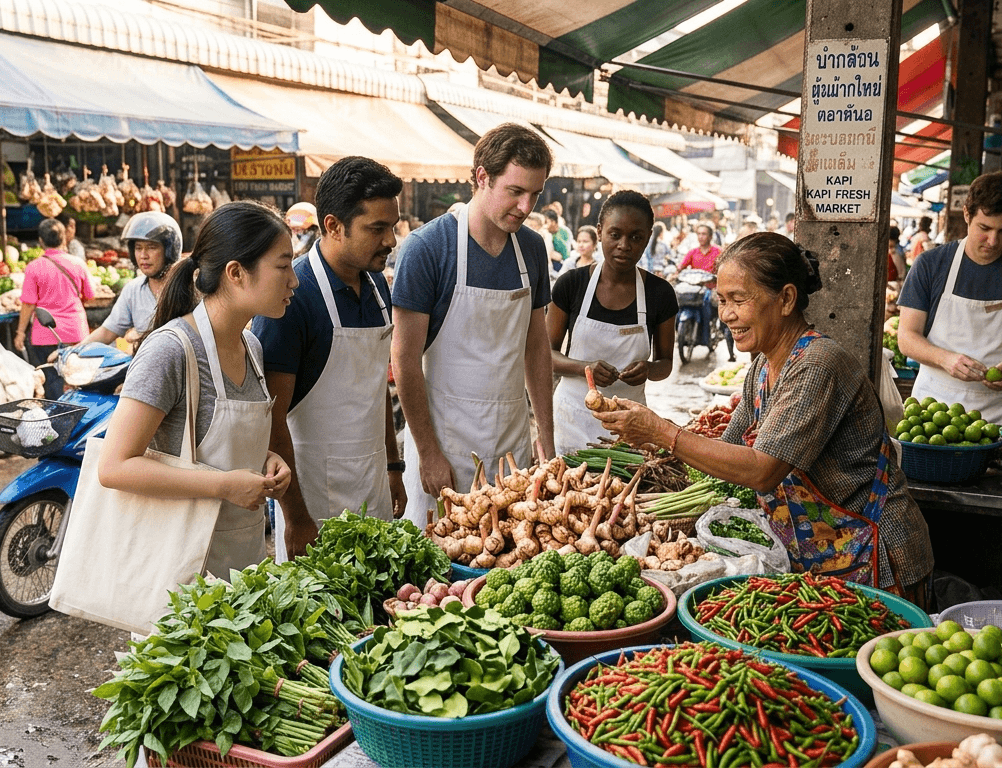
Learning to cook Thai food properly means understanding where its ingredients come from. Reputable academies build this into the course structure itself, with market tours included so students learn to identify and prepare authentic Thai ingredients before ever touching a wok. This kind of cultural grounding—browsing fresh galangal, kaffir lime leaves, and Thai basil at a local market—transforms culinary training from a technical skill into a genuine cultural exchange, deepening students’ appreciation for the traditions behind each dish.
Choosing the Right Program for Your Goals
Not every international student has the same ambitions. Some want an intensive one-week deep dive before returning home; others are pursuing a multi-week diploma with an eye toward opening a restaurant or working professionally overseas. Longer programs typically expand beyond Thai cuisine to cover regional Pan-Asian cooking, broadening a chef’s versatility. Prospective students should consider:
- Course length (one week versus multi-week diploma tracks)
- Whether accommodation and visa support are included
- Opportunities for internships or hands-on kitchen placements
- Accreditation status, such as Worldchefs approval
Professional culinary training in Thailand offers international students a rare combination: authentic techniques, English-language instruction, cultural immersion, and internationally recognized credentials, all set in the country that many consider the beating heart of Southeast Asian gastronomy. Whether your goal is a short, transformative week in the kitchen or a full diploma pathway with internship experience, Bangkok remains one of the most rewarding places on earth to study cooking abroad. If you’re ready to turn your passion for Thai cuisine into professional skill, explore the chef course options at Bangkok Thai Cooking Academy and take the first step toward your culinary journey in Thailand.
