
Chef training
Thai Curry Pastes, Sauces and Dips: Core Skills for Professional Chefs
Nov
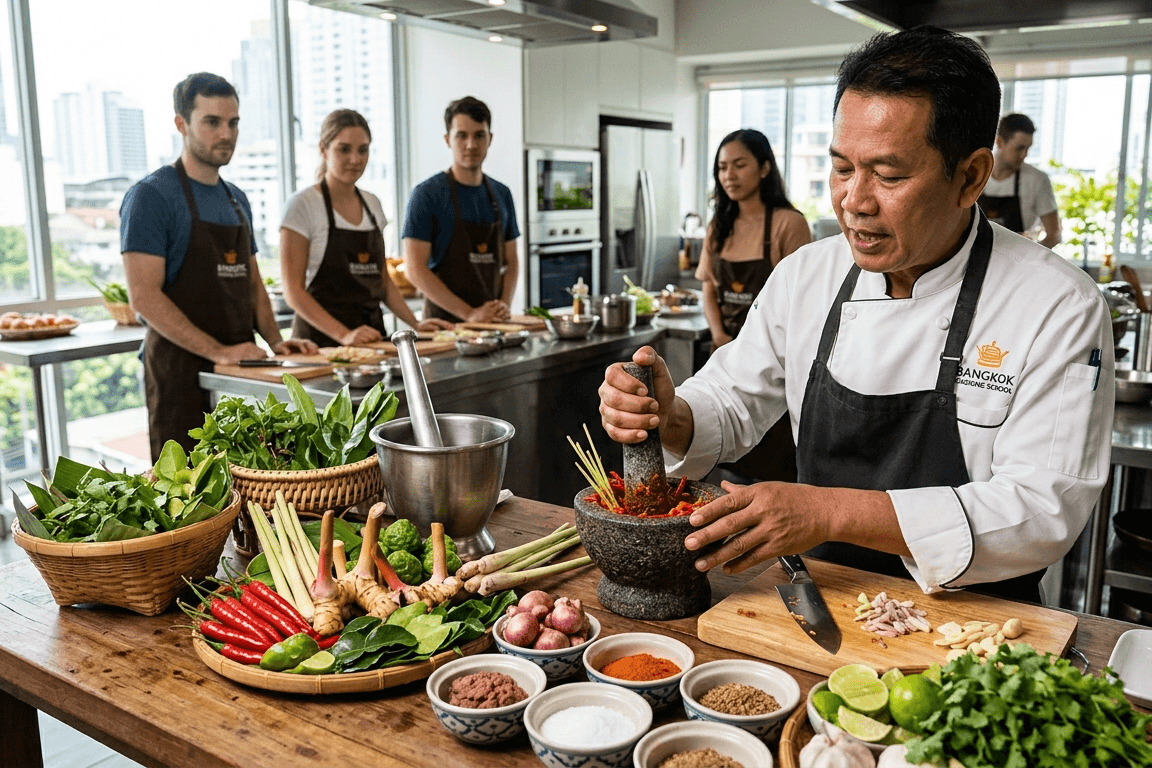
Ask any Thai chef where real cooking begins, and the answer is rarely the wok or the flame — it’s the mortar and pestle. Long before a curry hits the pan or a dipping sauce reaches the table, everything depends on a paste or a sauce built from scratch, pounded, blended, and balanced by hand. For chefs training in Thai cuisine, mastering Thai curry paste techniques and Thai sauces and dips training isn’t an optional specialty — it’s the foundation everything else is built on.
At Bangkok Thai Cooking Academy, this is treated as a core kitchen discipline rather than a side lesson. Our Worldchefs-approved professional chef courses dedicate structured training time to pastes, sauces, and dips precisely because they determine whether a dish tastes authentically Thai or merely resembles it. This article breaks down why these components matter so much, the techniques involved, and how professional training turns them into repeatable, kitchen-ready skills.
Why Pastes and Sauces Define Thai Cuisine
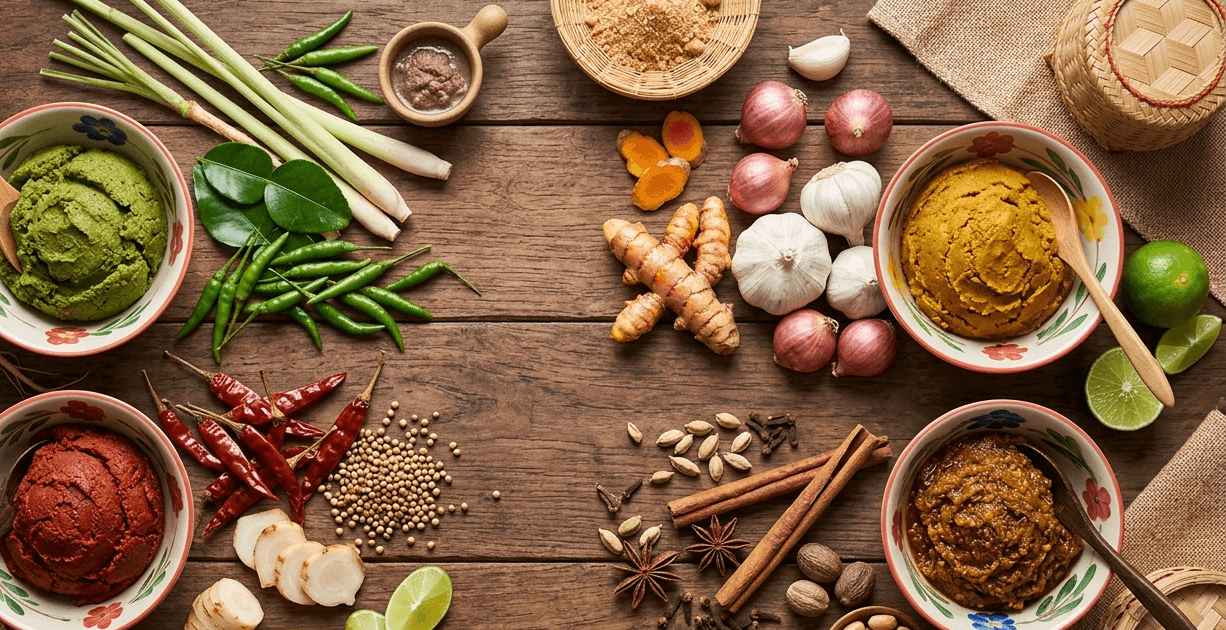
Thai cooking is built on balance — sweet, sour, salty, spicy, and sometimes bitter or umami, all calibrated in a single bite. That balance rarely comes from a single ingredient; it comes from a carefully constructed paste or sauce that concentrates dozens of flavors into one base. A red curry paste, for instance, might combine dried chilies, garlic, shallots, galangal, lemongrass, kaffir lime zest, coriander root, and shrimp paste — each contributing aroma, heat, or depth in a specific ratio.
This is why professional Thai kitchens treat paste-making as a technical skill rather than a shortcut task. Get the ratios wrong, or skip proper pounding technique, and the whole dish suffers, no matter how well the final cooking stage is executed.
✅ A Cultural Note: The Mortar and Pestle Still Matters
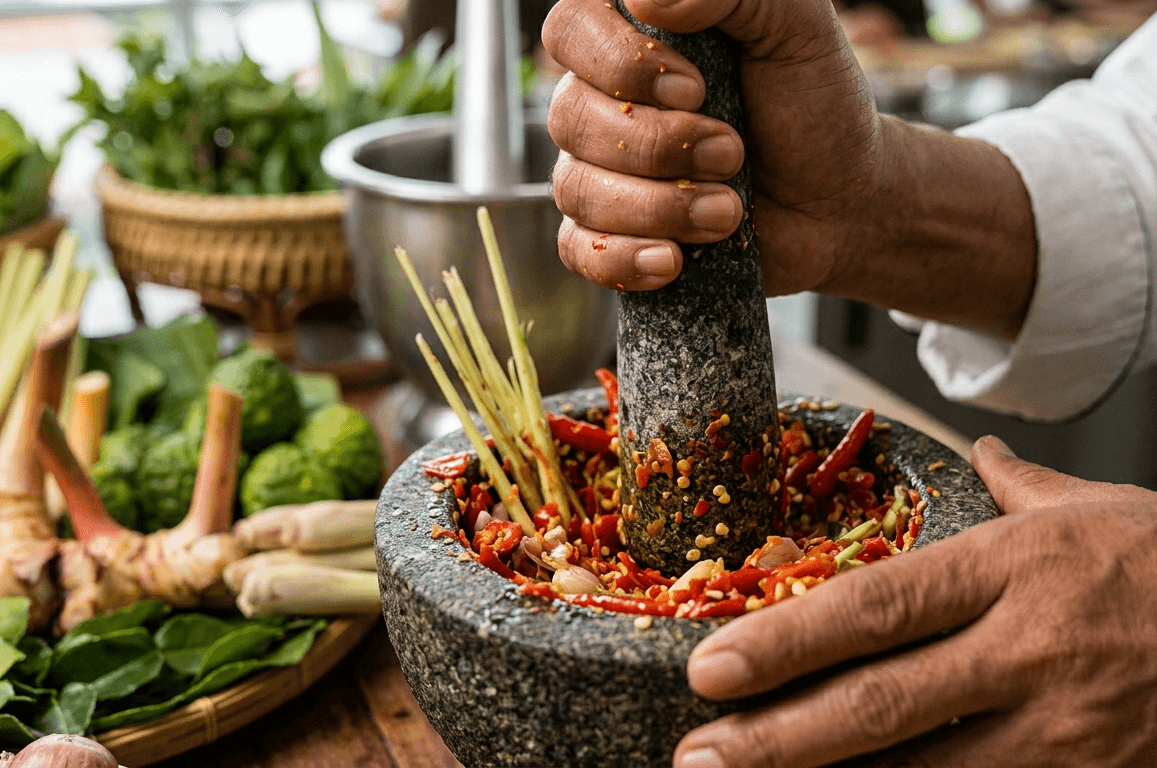
Many home cooks reach for a blender, but professional Thai chefs still favor the granite mortar and pestle for most pastes. Pounding — rather than blitzing — releases essential oils from aromatics like lemongrass and galangal more gradually, producing a rounder, more layered flavor. It’s slower, but the difference is noticeable to a trained palate, and it’s one of the first hands-on habits students build in a professional program.
Core Curry Paste Techniques Every Chef Should Master
There isn’t just one curry paste in Thai cuisine — there’s a family of them, each with its own character and technical demands.
- Red curry paste (nam prik gaeng phed) – built on dried red chilies, forming the base for dishes like gaeng phed and many stir-fried curries.
- Green curry paste (nam prik gaeng keow wan) – made with fresh green chilies, notably spicier and herbaceous, used in the iconic gaeng keow wan.
- Massaman curry paste – incorporates roasted dried spices like cardamom, cinnamon, and cumin, reflecting Thailand’s historic trade links with South Asia and the Middle East.
- Panang and yellow curry pastes – each with distinct spice ratios and textures suited to richer, coconut-heavy dishes.
Learning these pastes professionally means more than memorizing ingredient lists. Chefs are trained to:
- Toast and prepare dried spices correctly to unlock aroma without burning them.
- Sequence the pounding process — hard, fibrous ingredients first, softer aromatics last — to achieve a smooth, even paste.
- Adjust ratios for regional variation, since a curry paste in northern Thailand can differ meaningfully from one made in the south.
- Store and preserve pastes properly for consistent use in a working kitchen environment.
Thai Sauces and Dips: The Overlooked Skill Set
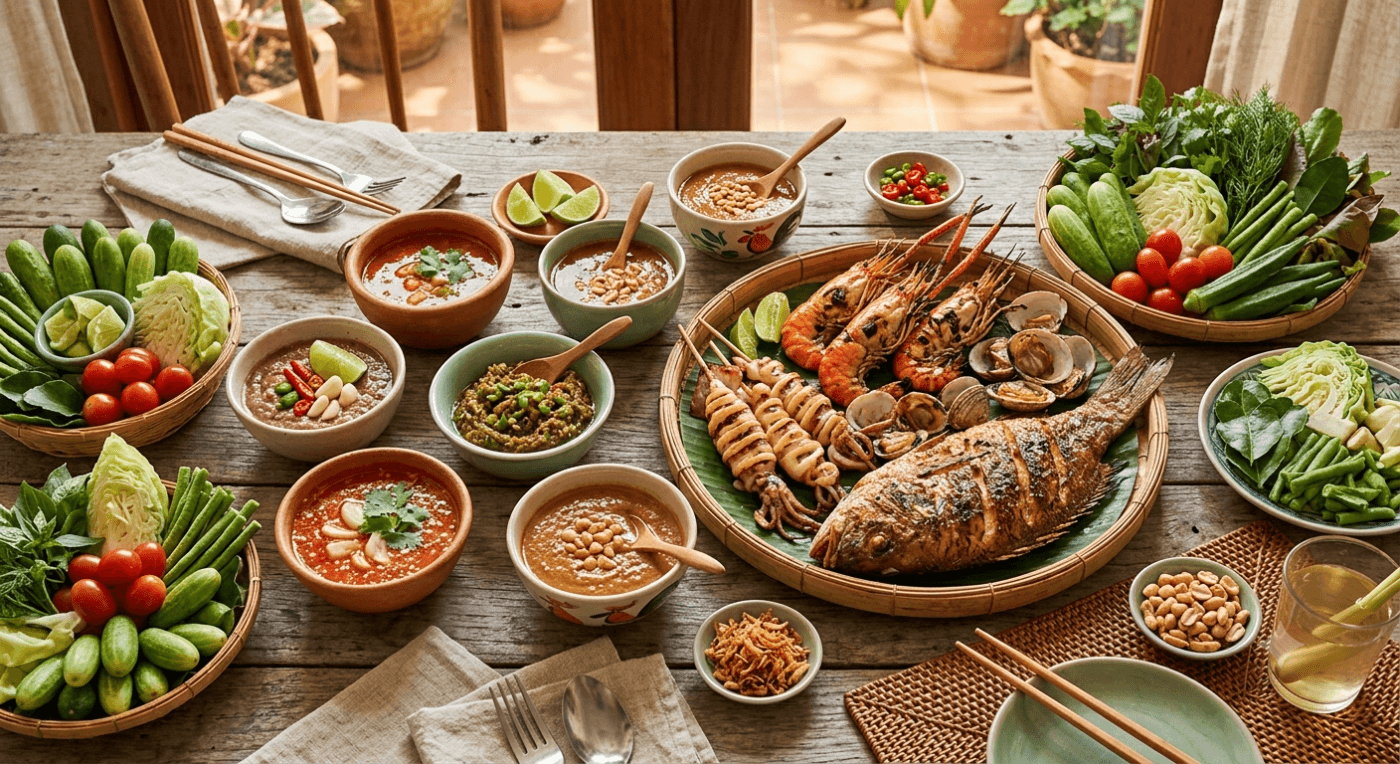
While curry pastes often get the spotlight, sauces and dips are just as essential to professional Thai cooking — and arguably more versatile across a menu. Nam jim sauces (dipping sauces) accompany grilled meats, seafood, and fresh vegetables; nam prik pastes and relishes are eaten with rice as dishes in their own right; and sweet, sour, and savory sauces tie together dishes like pad thai, larb, and som tam.
A well-trained chef needs command over sauces such as:
- Nam pla prik – a simple but essential fish sauce and chili condiment found on nearly every Thai table.
- Nam jim seafood – a punchy garlic-lime-chili sauce for grilled or steamed seafood.
- Nam prik ong and nam prik noom – northern Thai chili relishes with deep roasted, smoky flavor profiles.
- Sweet chili sauce and tamarind-based sauces – used across appetizers and street food classics.
Balancing Flavor Under Pressure
In a professional kitchen, sauces often need to be adjusted on the fly — a batch of tamarind might be more sour one week, chilies hotter the next. Training programs emphasize tasting and recalibrating in real time, teaching chefs to adjust salt, sugar, acid, and heat by instinct rather than rigid measurement. This skill, more than any single recipe, is what separates a competent cook from a chef who can run a Thai kitchen independently.
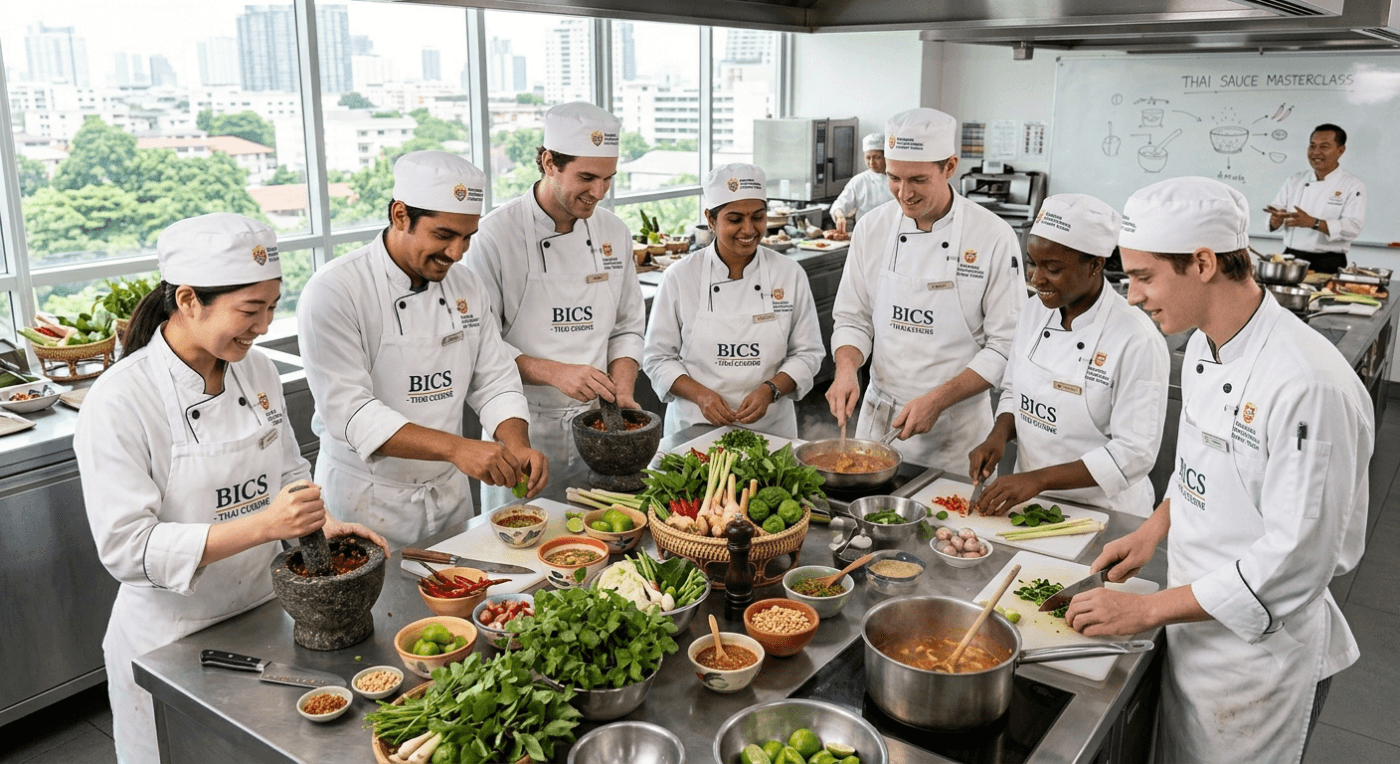
Curry pastes, sauces, and dips aren’t a side note in Thai cuisine — they’re its backbone, carrying centuries of regional technique and flavor philosophy in every pound of the pestle. For chefs who want to cook Thai food with real authenticity and confidence, mastering this core module is non-negotiable.
At Bangkok Thai Cooking Academy, this training is built into our Worldchefs-approved professional chef courses, where students work hands-on through pastes, sauces, and dips as part of a structured, internationally benchmarked curriculum. Whether you’re an aspiring chef, a restaurant owner-to-be, or a professional looking to deepen your craft, exploring our programs in Bangkok is a natural next step toward mastering the true foundations of Thai cooking.
