
Chef training
How to Become a Professional Thai Chef in Bangkok

Mar
From Home Cook to Certified Pro: How to Become a Professional Thai Chef in Bangkok
Bangkok is one of the world’s great culinary capitals. From the smoky woks of Yaowarat’s Chinatown to the refined tasting menus of Michelin-starred restaurants along the Chao Phraya River, Thai cuisine in its full spectrum is alive, evolving, and deeply rooted in culture. For those who feel drawn not just to eating Thai food but to mastering it, Bangkok is the most logical — and most inspiring — place to begin that journey. Whether you are a curious home cook, a hospitality professional seeking a competitive edge, or someone considering a full career pivot into the culinary arts, structured professional Thai chef training in Bangkok can take you from foundational skills to internationally recognized certification.
Understanding Thai Cuisine Before You Train
A Cuisine Built on Balance, Technique, and Tradition
Thai cuisine is often described through its famous four flavor pillars — sweet, sour, salty, and spicy — but this simplification barely scratches the surface. True Thai cooking is a discipline. It requires understanding aromatic pastes ground by hand in a granite mortar, the precise sequencing of ingredients in a wok over intense heat, and the cultural logic behind why certain dishes are prepared for ceremonies, festivals, or everyday family meals.
Dishes like tom kha gai, pad see ew, or massaman curry each carry regional identity, historical influence, and technical demands. Central Thai cuisine differs markedly from the bold, herbal flavors of the North or the fiery seafood-forward cooking of the South. A well-rounded professional Thai chef is expected to know all of these traditions — not just the dishes tourists order most.
This cultural and technical depth is precisely why aspiring chefs benefit from enrolling in a dedicated Thai culinary school in Bangkok rather than trying to self-teach from cookbooks or online videos alone.

The Path to Becoming a Professional Thai Chef
Step 1 – Start With Structured Foundations
Every culinary professional, regardless of nationality or background, benefits from learning the fundamentals in a structured environment. For Thai cuisine, this means understanding:
Core ingredients: galangal, lemongrass, kaffir lime leaves, Thai basil, fish sauce, shrimp paste, palm sugar, and more
Knife skills and prep techniques: julienning, chiffonade, and the fine carving traditions still practiced in upscale Thai restaurants
Paste and sauce fundamentals: making curry pastes from scratch rather than relying on commercial substitutes
Heat and wok control: understanding the role of high-flame cooking and how to manage multiple elements simultaneously
Introductory and intermediate cooking classes at an established Thai cooking school provide this grounding in a hands-on setting, usually with small group sizes and bilingual instruction suited for international students.
Step 2 – Progress Into Regional and Specialty Cuisine
Once the foundations are solid, the next stage of professional Thai chef training involves expanding into regional specialties and more complex techniques. This might include:
Northern Thai dishes such as khao soi (the beloved coconut curry noodle soup) and sai ua (Northern herb sausage)
Southern Thai curries, which tend to be richer in turmeric and coconut, with stronger spice profiles
Royal Thai cuisine — a refined, presentation-focused tradition developed in the Thai royal court that emphasizes intricate carving, delicate flavors, and visual elegance
Street food mastery: understanding why a great pad thai or som tum requires far more precision than it appears
Chefs who invest in this breadth of knowledge distinguish themselves in the global job market, where Thai restaurant owners and hotel F&B directors increasingly look for professionals fluent in more than one regional style.
Step 3 – Pursue Internationally Recognized Certification
This is where the difference between culinary hobbyists and true professionals becomes concrete. Enrolling in a formally accredited program at a recognized institution provides not just skills, but credentials that employers worldwide respect.
Bangkok Thai Cooking Academy is a Worldchefs-approved culinary school, meaning its professional training programs meet the globally benchmarked standards set by the World Association of Chefs’ Societies — the same body that endorses culinary programs in Paris, Tokyo, New York, and Sydney. For anyone serious about building a career, this accreditation is a significant differentiator.
A Worldchefs-recognized certification from a Thai culinary school in Bangkok tells hiring managers that you have been assessed against international standards, not just local ones.
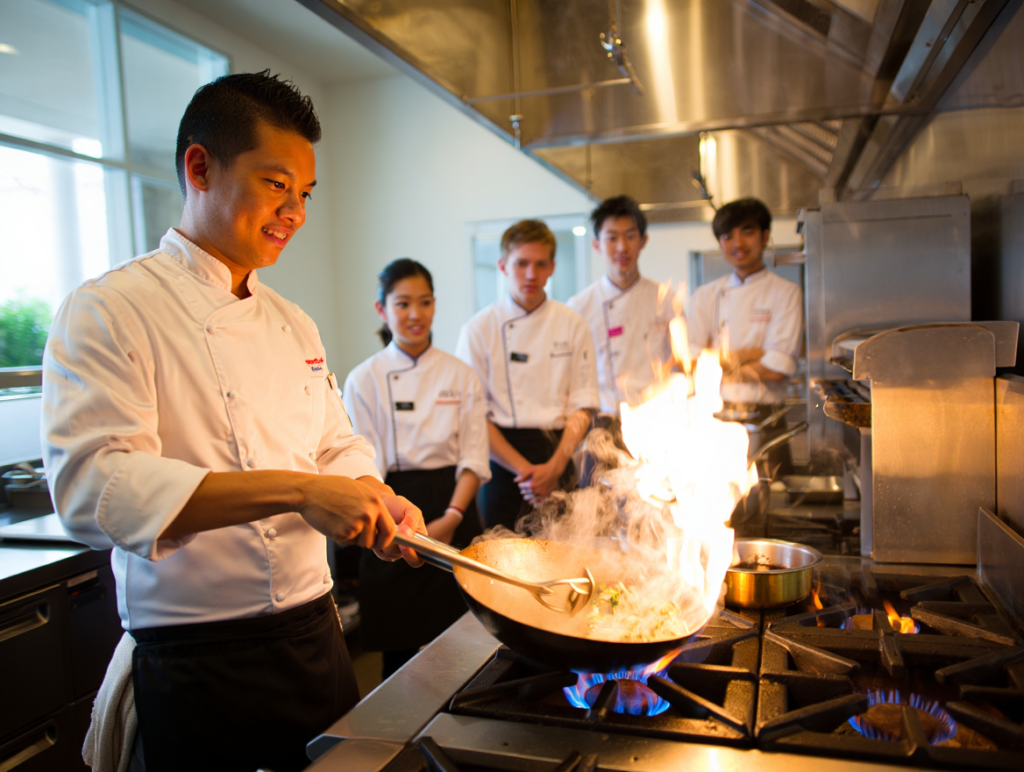
Step 4 – Train in Bangkok, Where the Ingredients Are Alive
No amount of instruction replaces the experience of training where the cuisine originates. Bangkok offers aspiring chefs something no culinary school abroad can replicate: direct, daily access to the raw materials of Thai cooking.
Training in Bangkok means:
Market immersions: visiting Or Tor Kor Market or Khlong Toei Market to source ingredients, understand seasonal availability, and learn how Thai chefs select produce
Tasting the real thing: eating khao man gai from a street vendor, a bowl of boat noodles on the canal, or a home-style gaeng keow wan in a family restaurant sharpens your palate in ways that no classroom exercise can
Cultural context: understanding that food in Thailand is inseparable from hospitality, generosity, and spiritual life — a context that makes your cooking more authentic and more meaningful
This immersive cultural dimension is one of the most compelling reasons international students choose to train at a Bangkok-based academy over institutions elsewhere.

Step 5 – Build Your Career Profile
Completing professional training is the beginning of a career, not the end of learning. After certification, professional Thai chefs typically pursue:
- Stage or apprenticeship placements in Thai restaurants, hotel kitchens, or resort properties across Southeast Asia
- Specialization in a niche such as vegan Thai cuisine, Thai desserts and pastry (khanom), or high-end catering
- Entrepreneurship — launching a food business, pop-up, catering service, or teaching their own cooking classes
- Further international study, using their Thai culinary credentials as a foundation for broader classical or fusion training
The global appetite for Thai cuisine continues to grow. Skilled, certified professionals who can cook authentically and speak to the cultural depth behind the dishes are in genuine demand.
World-Class Training in the Heart of Thai Food Culture
Bangkok Thai Cooking Academy combines rigorous, internationally benchmarked culinary education with the warmth and cultural richness that defines Thai hospitality. As a Worldchefs-approved institution, the Academy offers programs designed for both aspiring professionals and experienced chefs looking to deepen their Thai culinary expertise.
Courses range from focused short programs for travelers and food enthusiasts to structured professional pathways that result in globally recognized certification. Instruction is bilingual, the curriculum is regularly updated, and the teaching philosophy places equal importance on technical mastery and cultural understanding.
If your goal is to become a professional Thai chef — one who cooks with confidence, creativity, and authentic knowledge — there is no better place to begin than here, in Bangkok, with a faculty that has spent decades preserving and teaching this extraordinary cuisine.
The journey from curious food lover to certified professional Thai chef is more accessible than most people realize — and far more rewarding than they expect. Bangkok offers the ingredients, the culture, the markets, and the instructors. What it needs is your commitment.
Whether you are taking your first class or enrolling in a full professional program, Bangkok Thai Cooking Academy provides the structured, internationally recognized training to help you reach your culinary goals. Explore the available programs, find the pathway that suits your ambitions, and take the first step toward a career built around one of the world’s most beloved cuisines.
Ready to start your journey? Visit our Bangkok Professional Chef Courses training programs and book your first class in Bangkok.
