
Masterclass
The Art of Thai Flavor Balance: Sweet, Sour, Salty, Spicy and Umami

Sep
Few cuisines in the world treat flavor with the same precision as learning Thai cooking. Walk through any market in Bangkok and you’ll see it in action: a vendor tasting her tom yum broth, adjusting it with a squeeze of lime, a splash of fish sauce, a spoonful of sugar — small movements toward an invisible target. That target is balance. Thai food isn’t built around a single dominant taste the way some cuisines are. Instead, it orchestrates five flavors — sweet, sour, salty, spicy, and umami — into a single harmonious bite. Understanding this balance is the real key to cooking authentic Thai food, and it’s a philosophy we explore deeply in our hands-on classes at Bangkok Thai Cooking Academy.

Why Balance, Not Dominance, Defines Thai Cuisine
In many Western culinary traditions, a dish is often built around one star flavor. Thai cuisine works differently. A well-made Thai dish should let you taste all five flavors in some proportion, shifting from region to region and dish to dish, but always in conversation with one another. This is why Thai cooks rarely follow rigid measurements — a curry paste that’s slightly too sour on one day might need more palm sugar the next. Cooking becomes an act of constant tasting and adjusting.
✅A Practical Tip from the Kitchen:
If you want to internalize Thai flavor balance quickly, taste each element separately before combining: pure fish sauce, fresh lime juice, palm sugar, chili, and a spoon of stock. Once your palate recognizes each flavor on its own, you’ll notice it far more clearly within a finished dish — a technique we walk students through step-by-step during our masterclasses.

Sweet: The Softening Element
Sweetness in Thai cooking rarely stands alone; it’s used to round out sharper flavors. Palm sugar, with its deep caramel notes, is the most traditional sweetener, offering a mellower profile than refined white sugar.
✅Iconic dish:
Mango Sticky Rice (Khao Niew Mamuang) showcases sweetness at its purest, pairing ripe mango with coconut-infused sticky rice — a dessert, but also a lesson in how coconut milk itself carries natural sweetness used throughout savory cooking too.
Sour: Brightness and Freshness
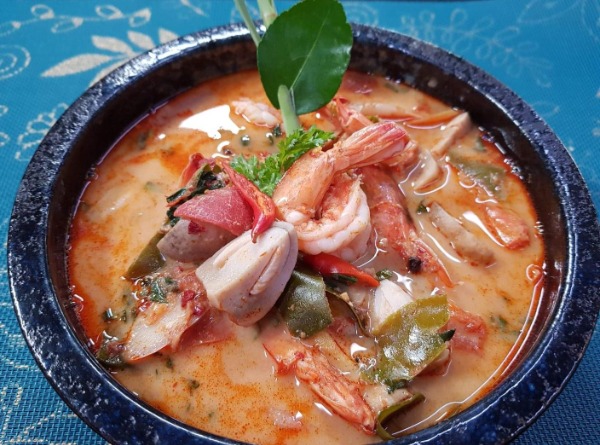
Sourness in Thai food comes from limes, tamarind, and unripe fruits like green mango, and its role is to cut through richness and awaken the palate.
✅Iconic dish:
Tom Yum Goong is the definitive expression of Thai sourness — a fiery, fragrant prawn soup where lime juice and lemongrass battle chili and fish sauce for dominance, yet somehow arrive at perfect equilibrium.

Salty: The Foundation
Salt in Thai cuisine almost never comes from table salt. It comes from fish sauce (nam pla), shrimp paste (kapi), and soy sauce — ingredients that deliver salinity alongside deep savory complexity.
✅ Iconic dish:
Som Tam (Green Papaya Salad) relies on fish sauce as its salty backbone, balanced against lime, palm sugar, and chili in one of Thailand’s most beloved street food dishes.
Spicy: Heat With Purpose
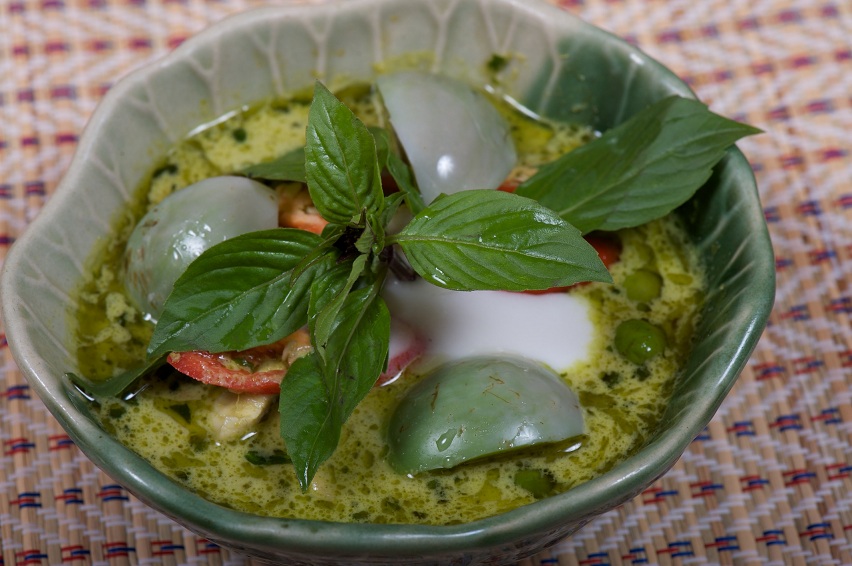
Chili heat in Thai cooking is rarely about pain for its own sake — it’s meant to stimulate appetite and highlight other flavors. Bird’s eye chilies, Thailand’s most common variety, bring sharp, immediate heat.
✅ Iconic dish:
Gaeng Keow Wan (Green Curry) uses green chilies not just for spice but for the herbal, grassy backbone of the curry paste itself, balanced by creamy coconut milk and a touch of sweetness.

Umami: The Savory Backbone
Umami is the deep, mouth-filling savoriness that ties everything together, often supplied by fermented ingredients like fish sauce, shrimp paste, and soy — many of which are shared with other Southeast and East Asian culinary traditions.
✅ Iconic dish:
Pad Krapow Moo Saap (Stir-Fried Pork with Basil) leans on soy sauce, fish sauce, and oyster sauce layered together, proving that umami in Thai food is rarely a single note — it’s a chord.
Bringing the Five Flavors Together
Mastering these five flavors individually is only half the journey. The real skill — the one that separates home cooks from confident chefs — is learning to taste a dish in progress and know exactly which flavor it’s missing. This is precisely the kind of hands-on, palate-driven training offered at Bangkok Thai Cooking Academy’s masterclasses, where our Worldchefs-approved curriculum gives both curious travelers and aspiring professional chefs an internationally recognized foundation in authentic Thai technique.
The five flavors of Thai cuisine aren’t just ingredients — they’re a way of thinking about food. Once you learn to taste for balance rather than dominance, an entire cuisine opens up in front of you. If you’re ready to move from theory to practice, join us at Bangkok Thai Cooking Academy in Bangkok, where you’ll cook, taste, and adjust your way to genuine Thai flavor mastery — one curry, one dip, one perfectly balanced bite at a time.
