
Chef training
From 25 to 270 Dishes: How Intensive Chef Training Builds Real Kitchen Confidence

Oct
Walk into a professional kitchen for the first time and you’ll notice something immediately: confidence looks like calm hands, not loud opinions. The chefs who move fastest, waste least, and taste with certainty aren’t necessarily the most talented — they’re the ones who have repeated the fundamentals so many times that hesitation has been replaced by muscle memory. That kind of confidence isn’t taught in a single afternoon class. It’s built dish by dish, week by week, through structured repetition and escalating challenge.
At Bangkok Thai Cooking Academy, this progression is measurable. Students in the Worldchefs-approved professional chef courses move from roughly 25 dishes in their first week to as many as 270 dishes across a full ten-week program. That number isn’t a marketing flourish — it’s the actual architecture of how kitchen confidence gets built, one carefully sequenced skill at a time.

Why Dish Count Matters More Than You’d Think
Repetition Is the Real Curriculum
It’s tempting to think of culinary training as a collection of recipes. In reality, the recipes are just the vehicle. Underneath each dish sits a smaller set of transferable skills: knife control, heat management, seasoning balance, timing multiple pans at once. When a student prepares 25 to 30 dishes in a single week, they aren’t memorizing 25 to 30 unrelated processes — they’re practicing the same handful of techniques again and again, in slightly different contexts, until those techniques stop requiring conscious thought.
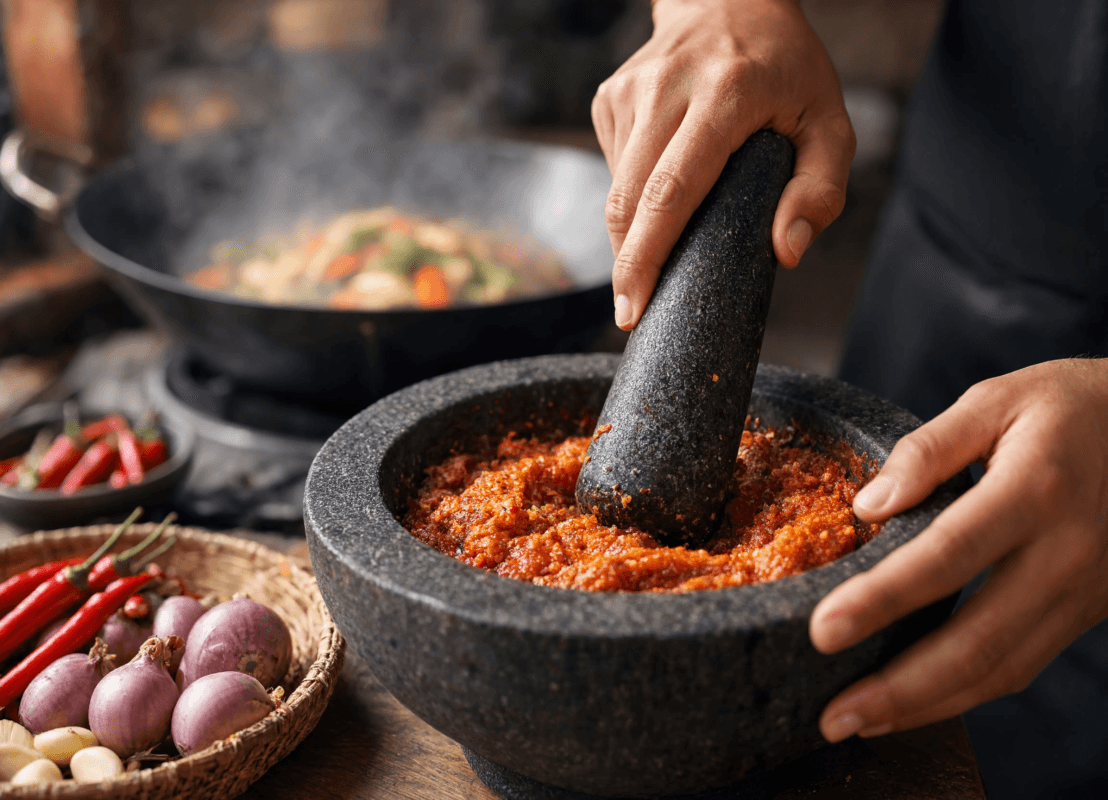
This is why intensive Thai chef training produces confidence faster than occasional weekend classes. A student who cooks four dishes a month might understand curry paste in theory for a year. A student who pounds fresh Thai curry paste by hand a dozen times in a single week develops a feel for texture, aroma, and consistency that no cookbook can teach.
From Survival Mode to Muscle Memory
The First Week: Building the Base
In the earliest days of training, most students are simply trying to keep up — learning to hold a cleaver correctly, identifying galangal versus ginger, understanding the difference between Thai holy basil and sweet basil. This is the 25-dish stage: essential, foundational, and intentionally paced so that no one is overwhelmed before the basics are locked in. Diplomas at this stage (a Personal Thai Culinary Chef Diploma after one week) mark a real milestone, even if it feels early.
Milestones Along the Way: Weeks, Not Days
Weeks Two and Three: Compounding Skills
By the second and third weeks, cumulative dish counts climb into the 50–90 range, and something shifts. Students stop asking “how do I do this?” and start asking “how do I do this better?” Curry pastes get smoother, wok movements get more economical, plating becomes intentional rather than accidental. This is where a Professional Thai Culinary Chef Diploma is awarded — a signal that the student has moved from imitation to genuine technique.
Weeks Four Through Six: Mastery Territory
Students who continue into weeks four, five, and six are working through 100 to 154 dishes, layering in more complex regional Thai recipes, advanced sauce work, and refined presentation. At this stage, training earns a Master or Grand Master Thai Culinary Chef Diploma — recognition that the student can now operate with the speed and consistency expected in a professional kitchen, not just a home one.
✅ A Cultural Note on Thai Cooking’s Depth:
Thai cuisine rewards this kind of intensive repetition precisely because it’s built on balance — the interplay of sour, sweet, salty, spicy, and sometimes bitter in a single dish. That balance can’t be rushed or reduced to a fixed formula; it has to be tasted and adjusted hundreds of times before a cook develops an instinct for it. This is part of why Thai chefs traditionally trained through years of kitchen apprenticeship rather than short courses — intensive training compresses that same immersive repetition into a matter of weeks.
Beyond Thai: Scaling Toward the 270-Dish Milestone
For students pursuing the Pan-Asian and Grand Master programs, training extends into Korean, Japanese, Vietnamese, and Chinese techniques, pushing cumulative dish counts toward 160, 206, and ultimately 270 in the ten-week International Grand Master Pan Asian Course. At this level, the goal isn’t just volume — it’s versatility. A chef who can move fluidly between a Thai green curry, Japanese sushi rice, and Korean kimchi fermentation has proven something rarer than talent: adaptability under pressure, the true hallmark of professional kitchen confidence.
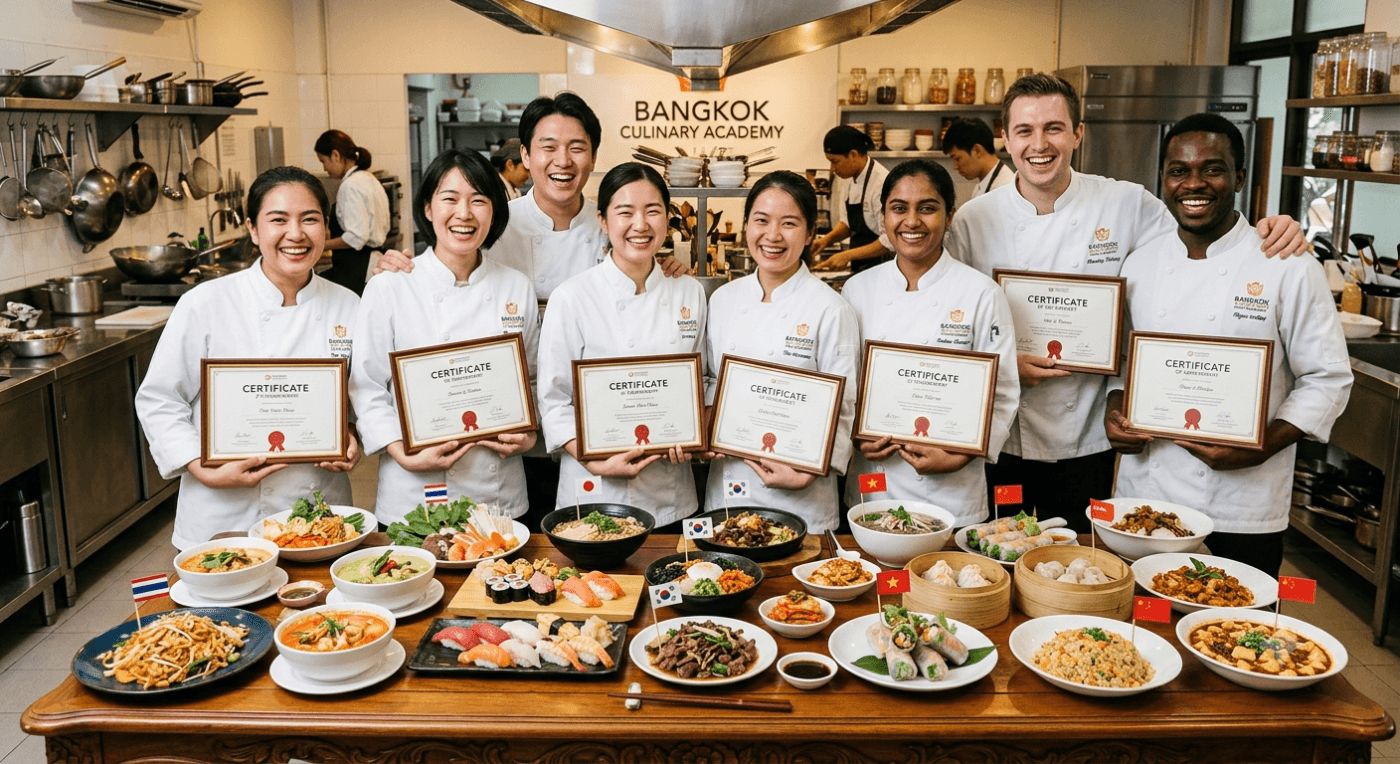
Kitchen confidence isn’t a personality trait — it’s a byproduct of structured, cumulative practice. Whether a student stops at 25 dishes or continues all the way to 270, each milestone represents real, demonstrable skill, backed by an internationally recognized diploma. If you’re ready to trade hesitation for hands-on mastery, explore the professional chef training programs at Bangkok Thai Cooking Academy and start building your own dish count — and your confidence — one authentic recipe at a time.
