
Pastry & Baking
French Pastry Training in Thailand: Essential Techniques Every Beginner Can Learn

Oct
Bangkok isn’t the first city that comes to mind when people think of croissants and puff pastry, yet it has quietly become one of Southeast Asia’s most exciting destinations for aspiring pastry chefs. French pastry training in Bangkok blends European technique with the precision, discipline, and hospitality that define Thai culinary culture — and for beginners, that combination creates an unusually supportive learning environment. Thailand’s tropical humidity and heat actually sharpen a student’s understanding of butter temperature, gluten development, and lamination timing, since even small variations in climate affect how dough behaves. Add in the affordability of professional-level training compared to Europe, and it’s easy to see why more home bakers and career-changers are choosing Bangkok to build their foundations.
This article walks through the essential beginner pastry techniques every student encounters when starting French pastry training — from laminated dough to classic pastry cream — and explains why mastering them in a structured, hands-on program makes all the difference.
Why Learn French Pastry in Thailand?
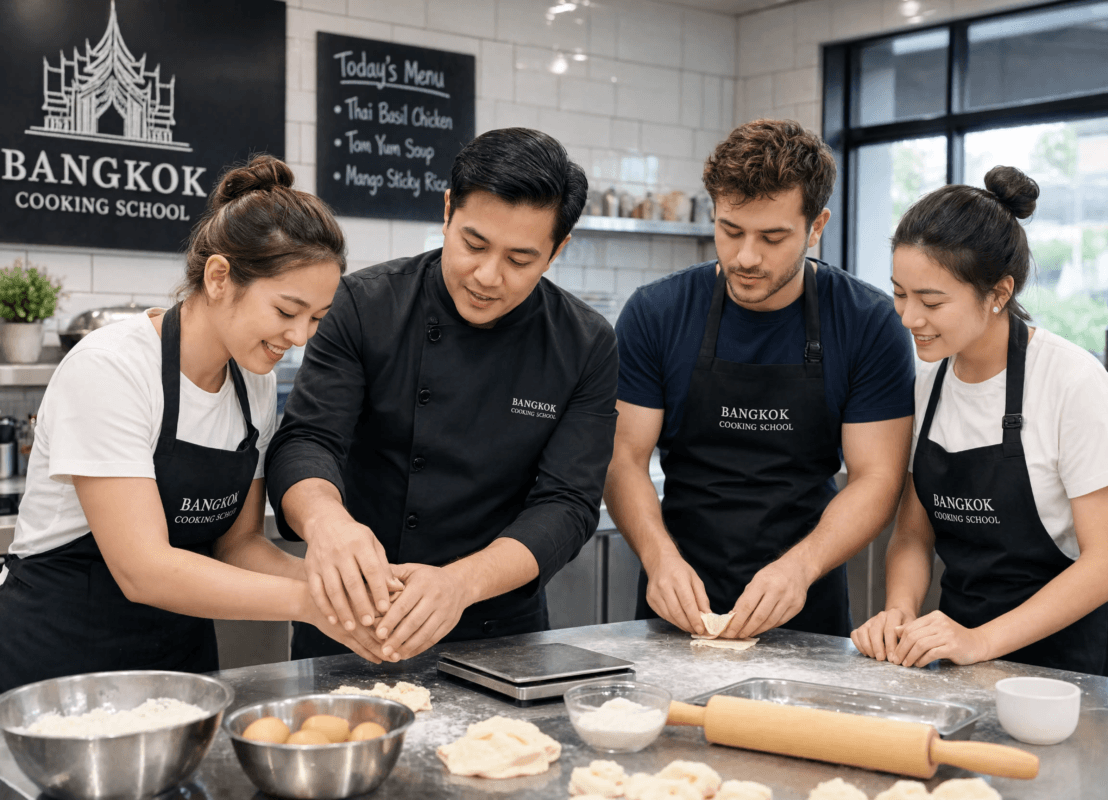
Thailand’s culinary schools have built a strong international reputation, partly because many, including Bangkok Thai Cooking Academy, hold Worldchefs-approved status — meaning training is benchmarked against global professional standards. Students learn the same techniques taught in Paris or Lyon, but within smaller class sizes, English-language instruction, and a curriculum designed specifically for beginners with zero prior experience.
✅ A Tropical Classroom That Builds Real Skill:
Working with butter and dough in a warm, humid kitchen forces students to develop a genuine feel for temperature control rather than relying on a naturally cool European climate to hide technique gaps. Chefs who train in Bangkok often say this makes them more adaptable bakers wherever they end up working next.
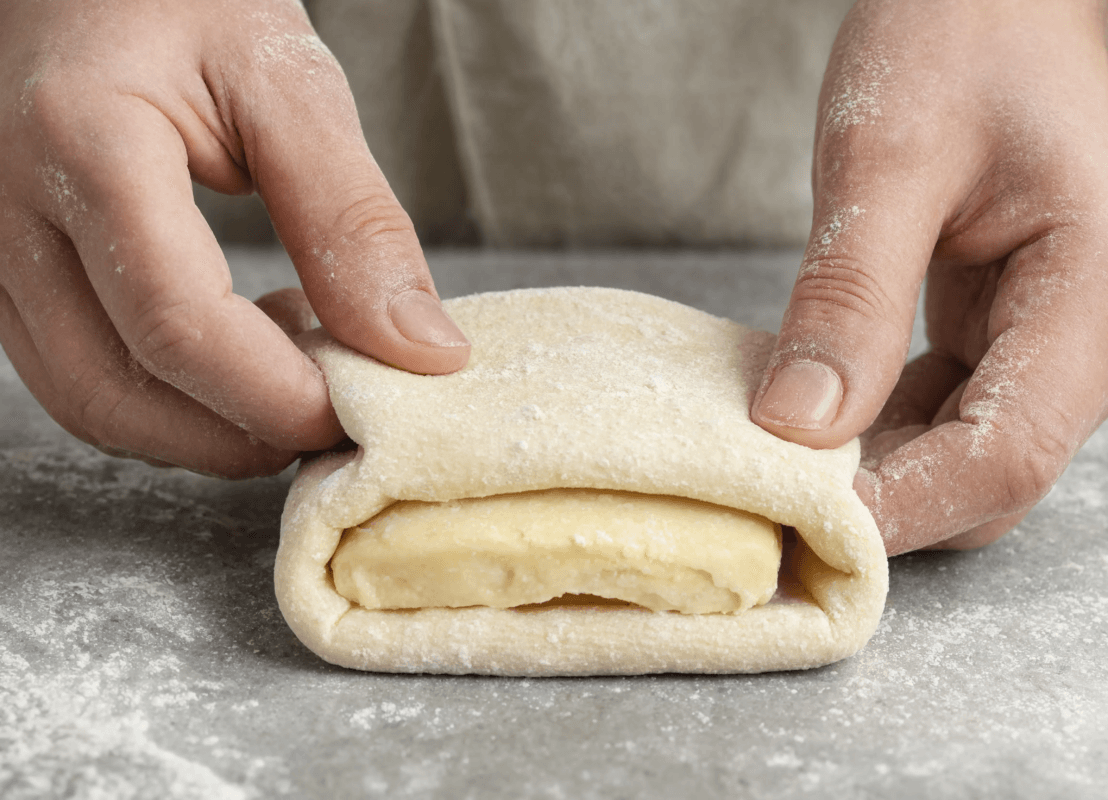
Foundational Technique #1: Puff Pastry (Pâte Feuilletée)
Puff pastry is often the first true test of patience in any pastry program. It relies on lamination — folding butter into dough in repeated layers so that, once baked, steam separates those layers into dozens of flaky, golden sheets. For beginners, three elements matter most:
- Temperature control – keeping both butter and dough cold enough to stay separate but pliable enough to fold without cracking.
- Consistent rolling pressure – uneven pressure creates uneven layers and irregular rise.
- Resting time – allowing gluten to relax between folds prevents shrinkage and distortion during baking.
Students typically practice this technique on classic applications like palmiers, apple turnovers, and tarte tatin before progressing to more advanced viennoiserie such as croissants and Danish pastry.
✅ A Beginner’s Tip for Better Lamination:
If the butter starts to soften or peek through the dough while rolling, stop and refrigerate for 10–15 minutes rather than pushing forward. Rushing this step is the single most common mistake new pastry students make — and one that experienced chefs can quickly help correct in a hands-on class setting.
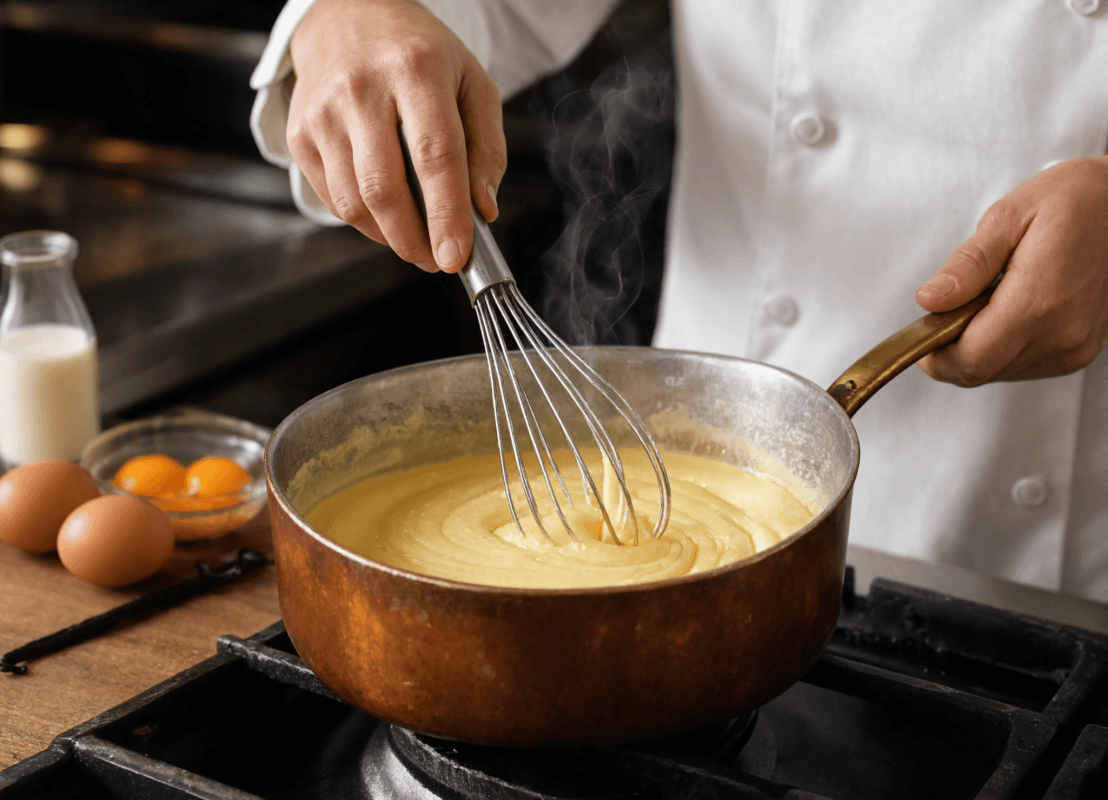
Foundational Technique #2: Pastry Cream (Crème Pâtissière)
Alongside laminated dough, pastry cream is the second pillar every beginner must master. This custard base — made from milk, egg yolks, sugar, and cornstarch — fills eclairs, tarts, mille-feuille, and countless other classic desserts. The technique hinges on:
- Tempering the eggs slowly with hot milk to avoid scrambling them.
- Constant whisking over heat until the mixture thickens to a smooth, glossy consistency.
- Proper cooling, with plastic wrap pressed directly onto the surface to prevent a skin from forming.
Once mastered, pastry cream becomes a building block for flavored variations — chocolate, coffee, or fruit-infused — that appear throughout a pastry chef’s repertoire.
Building a Strong Pastry Foundation Step by Step
Rather than jumping straight into advanced desserts, well-structured training programs sequence techniques so each skill reinforces the next. A typical beginner-friendly progression looks like this:
- Choux pastry and cream puffs
- Custard-based fillings and pies
- Sponge cakes and simple layered desserts
- Laminated doughs like puff pastry and croissants
- Chocolate work and advanced cake assembly
This gradual build mirrors the approach used in Bangkok Thai Cooking Academy‘s professional pastry curriculum, where students move from foundational recipes toward more advanced French techniques such as opera cake, Paris-Brest, and kouign-amann over the course of several weeks.
The Cultural Advantage of Learning Pastry in Bangkok
Thailand’s food culture places enormous value on precision, patience, and respect for ingredients — qualities that translate naturally into pastry work. Bangkok’s markets also offer beginners a unique advantage: access to high-quality tropical fruits like mango, passion fruit, and coconut, which are often incorporated into French techniques to create hybrid desserts that reflect both traditions. Learning classic French pastry in this environment gives students a broader, more adaptable skill set than a single-cuisine education could offer.
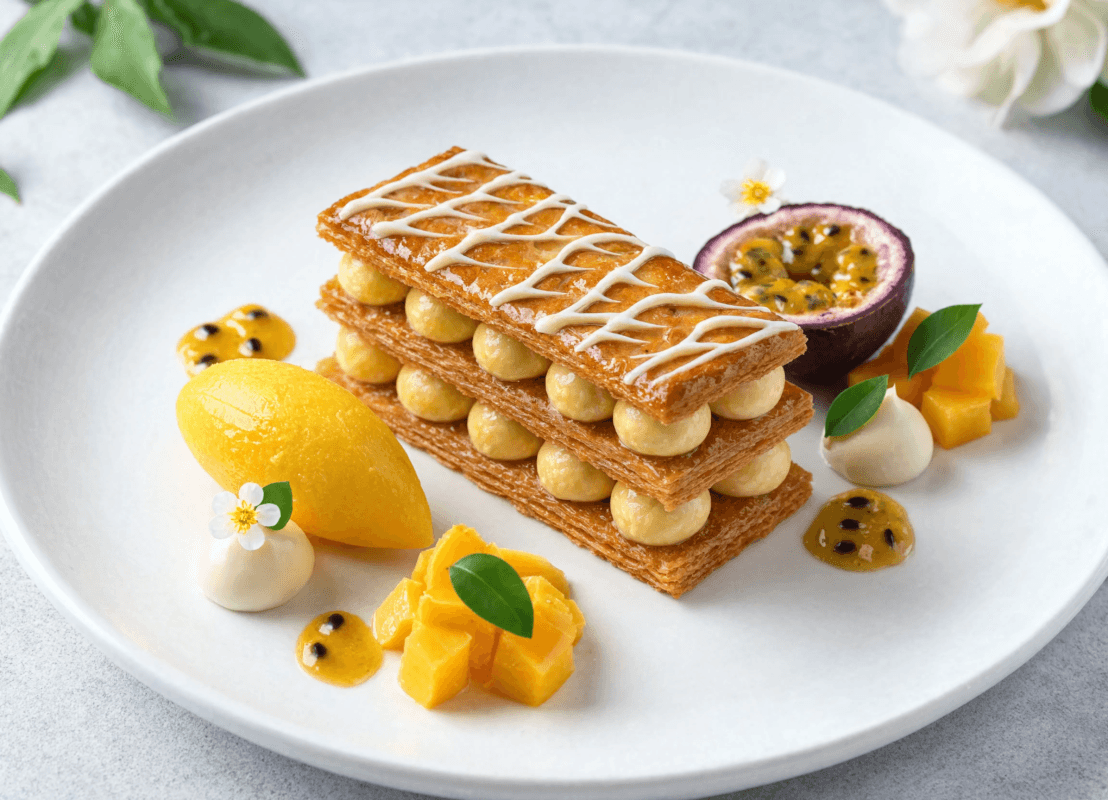
Mastering puff pastry and pastry cream isn’t just about following a recipe — it’s about developing the hands-on instincts that separate confident bakers from hesitant ones. Learning these techniques with experienced pastry chefs, in small groups, and with real-time feedback accelerates that learning curve dramatically compared to solo practice at home.
If you’re ready to build real pastry skills from the ground up, explore the Professional Pastry and Baking Course at Bangkok Thai Cooking Academy, where beginners train alongside professional chefs, learn up to 101 recipes, and can earn an internationally recognized diploma — all in the heart of Bangkok.
