
Pastry & Baking
Artisan Bread Making Course in Bangkok: From Dough to Professional Production
Nov
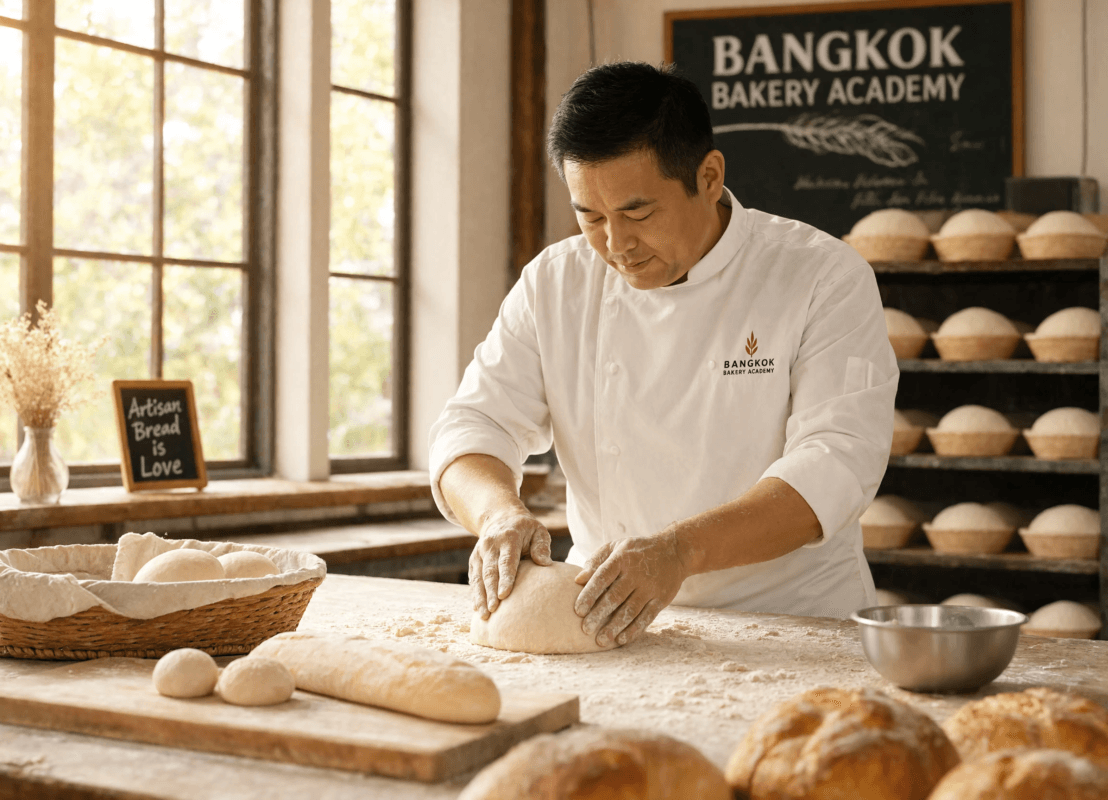
Bangkok’s street-food stalls and floating markets get most of the spotlight, but tucked behind the city’s love of rice and noodles is a growing appetite for something else entirely: exceptional bread. As international hotels, cafés, and boutique bakeries multiply across Thailand, demand for skilled artisan bakers has never been higher. For travelers, career-changers, and working chefs alike, an artisan bread making course in Bangkok offers a rare opportunity — to master European baking traditions while training in one of Asia’s most dynamic food capitals.
This article walks through what a serious bread program should cover, from the science of dough to the realities of scaling recipes for commercial kitchens, and why Bangkok has quietly become one of the best places in Southeast Asia to learn the craft.
Why Learn Artisan Bread in Bangkok?
Bangkok’s culinary schools blend Western technique with hands-on, kitchen-floor teaching that’s often more intensive than what’s available in Europe or North America. Tuition and living costs are also considerably lower, which means students can commit to longer, deeper training without the financial strain of a program abroad. Add in a warm, humid climate that behaves very differently with yeast and gluten than a temperate European bakery, and you get a genuinely useful — if unexpected — training ground for bakers who’ll eventually work anywhere in the world.
✅ A Cultural Note: Bread’s Place in Thai Food Culture
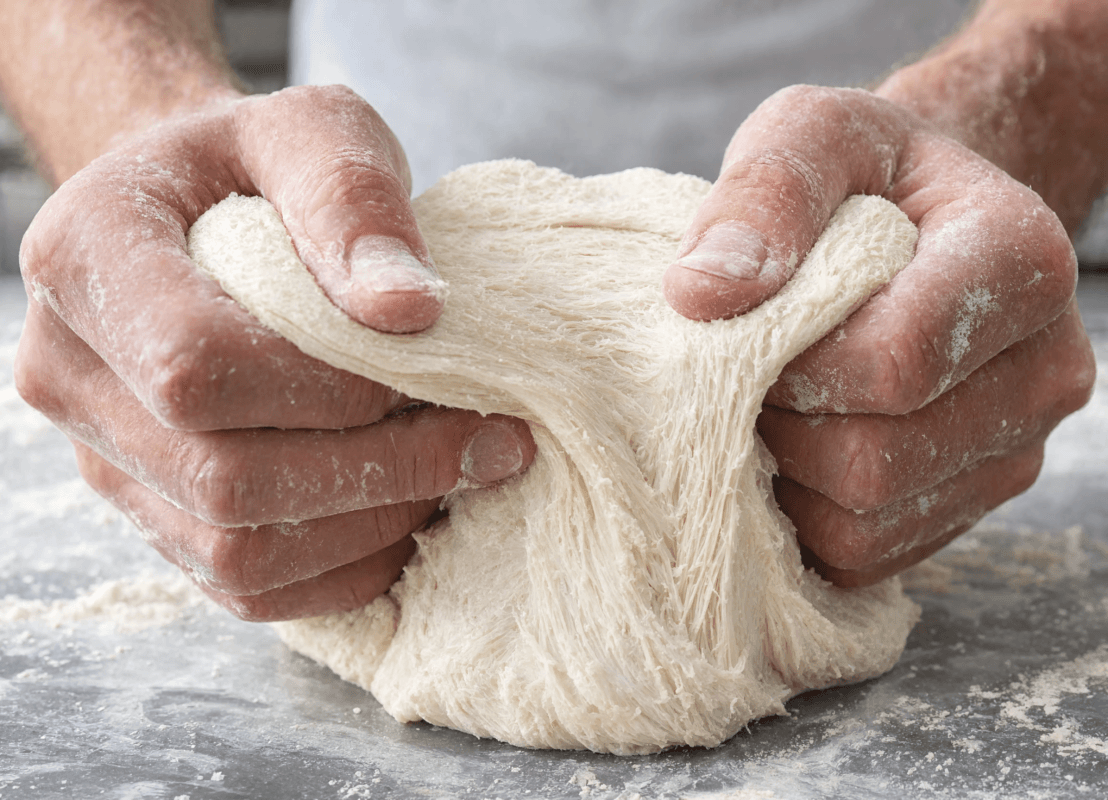
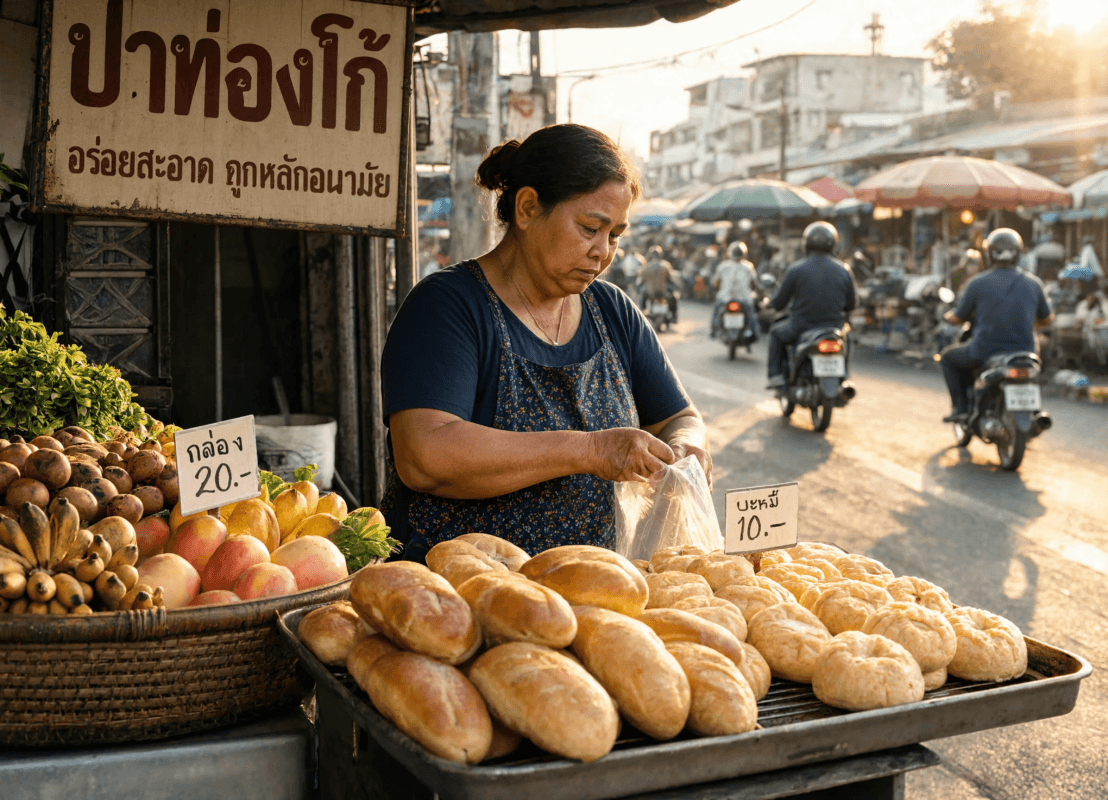
Bread isn’t native to Thai cuisine, but it has a longer history here than most visitors assume — from Portuguese-influenced baked goods introduced centuries ago along the Gulf of Thailand, to the French-style baguettes sold at Bangkok’s morning markets today. Learning bread in Bangkok means learning it inside a food culture that has always absorbed outside influences and made them its own, which is exactly the mindset a modern artisan baker needs.
Dough Fundamentals: Where Every Great Loaf Begins
Understanding Flour, Hydration, and Gluten Development
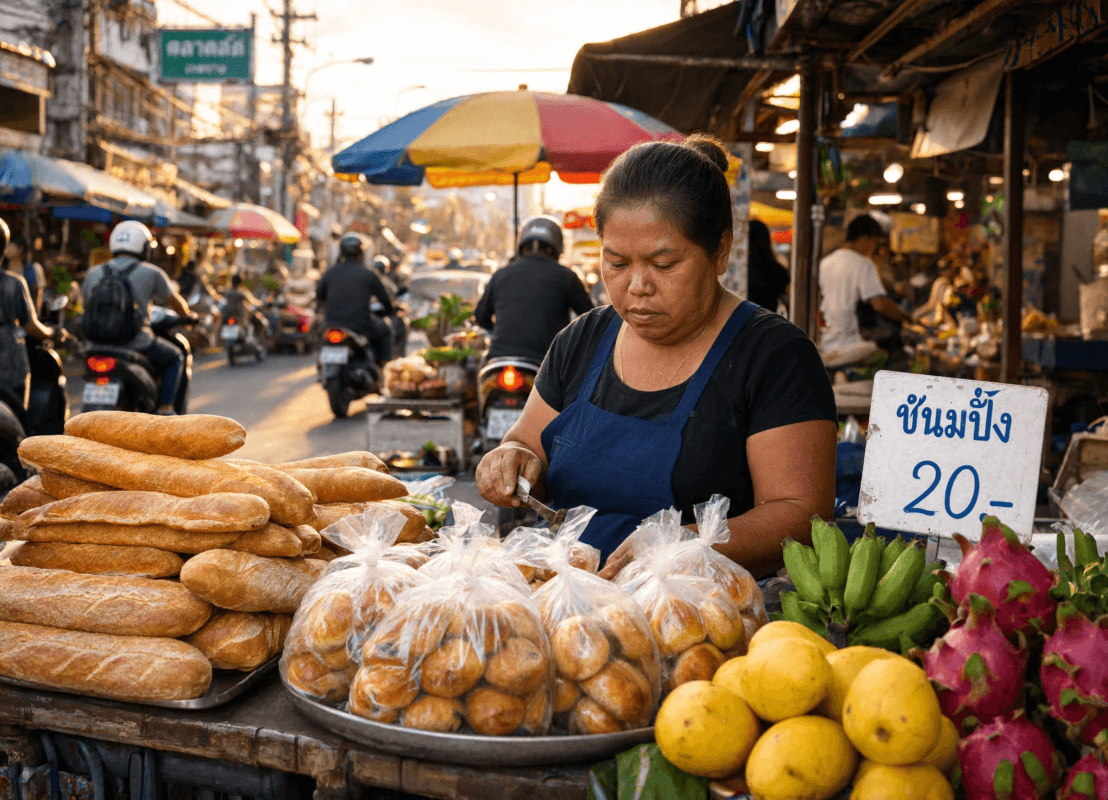
Before a student ever shapes a loaf, a solid course spends real time on the building blocks: flour protein content, hydration percentages, and how gluten networks form and strengthen through mixing and folding. These fundamentals determine everything downstream — crumb structure, crust, oven spring, and shelf life. Students typically work through a progression of doughs, from lean, low-hydration bases to higher-hydration formulas that demand more developed technique.
✅ Tip: Reading Dough by Feel, Not Just by Recipe
Experienced instructors push students to trust touch over timers. A well-developed dough should feel elastic and slightly tacky rather than sticky or slack. This “feel-based” instinct is one of the hardest skills to build from a book — it comes only from repeated, guided practice, which is why hands-on training outperforms self-study every time.
Mixing Methods and Their Effect on Texture
Courses generally introduce several mixing approaches — straight dough, sponge methods, and autolyse techniques — so students understand how each affects flavor development and final texture. Comparing loaves side by side, made from identical ingredients but different mixing methods, is often the moment students grasp just how much technique shapes the final product.
Fermentation: The Heart of Artisan Baking
Bulk Fermentation and Flavor Development
Fermentation is where artisan bread earns its name. Long, slow fermentation — whether through extended bulk proofing, pre-ferments, or natural leavens — builds the complex flavor and digestibility that separate artisan loaves from mass-produced bread. A strong curriculum covers how temperature, time, and yeast quantity interact, giving students the tools to adjust fermentation schedules for different environments.
Working with Bangkok’s Climate
✅ Tip: Fermentation in a Tropical Kitchen
Thailand’s heat and humidity accelerate fermentation dramatically compared to cooler climates, and students learn to compensate with cooler dough temperatures, adjusted proofing times, and closer monitoring. This is a genuinely valuable, transferable skill: any baker who learns to manage fermentation in Bangkok’s climate will find it far easier to adapt to more forgiving conditions elsewhere.
Sourdough and Natural Leavening
Maintaining a live starter, understanding its rhythms, and using it to build flavor and structure is typically a core module. Students learn to read a starter’s activity, troubleshoot sluggish or overactive cultures, and incorporate it into both rustic country loaves and more refined formulas.
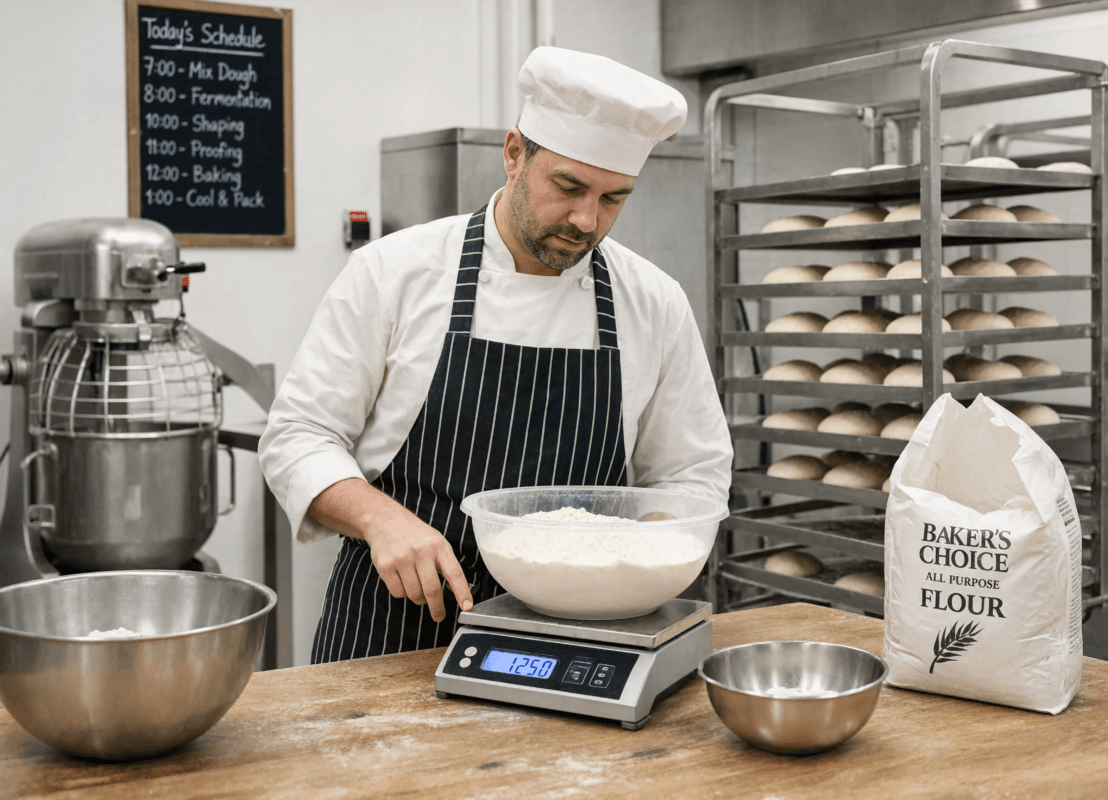
From Kitchen to Production: Scaling Artisan Bread
Recipe Scaling and Baker’s Percentages
Home baking and commercial baking are different disciplines, and a professional-track course makes that clear. Students learn to work with baker’s percentages — expressing every ingredient as a ratio of flour weight — so recipes can be scaled up or down accurately without guesswork. This single skill is often what separates a hobbyist from someone ready to run a bakery program.
Batch Production, Consistency, and Workflow
✅ Tip: Building a Bakery Schedule That Works
Producing bread at volume requires more than good formulas — it requires timing. Courses that go beyond hobby-level instruction teach students to plan a production schedule backward from service or delivery times, coordinating mixing, fermentation, shaping, and baking across multiple batches. This kind of workflow planning is exactly what hospitality employers look for in a baker.
Equipment and Standards for Commercial Kitchens
Understanding deck ovens, proofing cabinets, and mixer capacities — and how they behave differently from home equipment — rounds out the production-focused portion of training. For students aiming at professional roles, this exposure to commercial-scale tools is often the difference between a fun hobby course and a genuinely career-ready qualification.
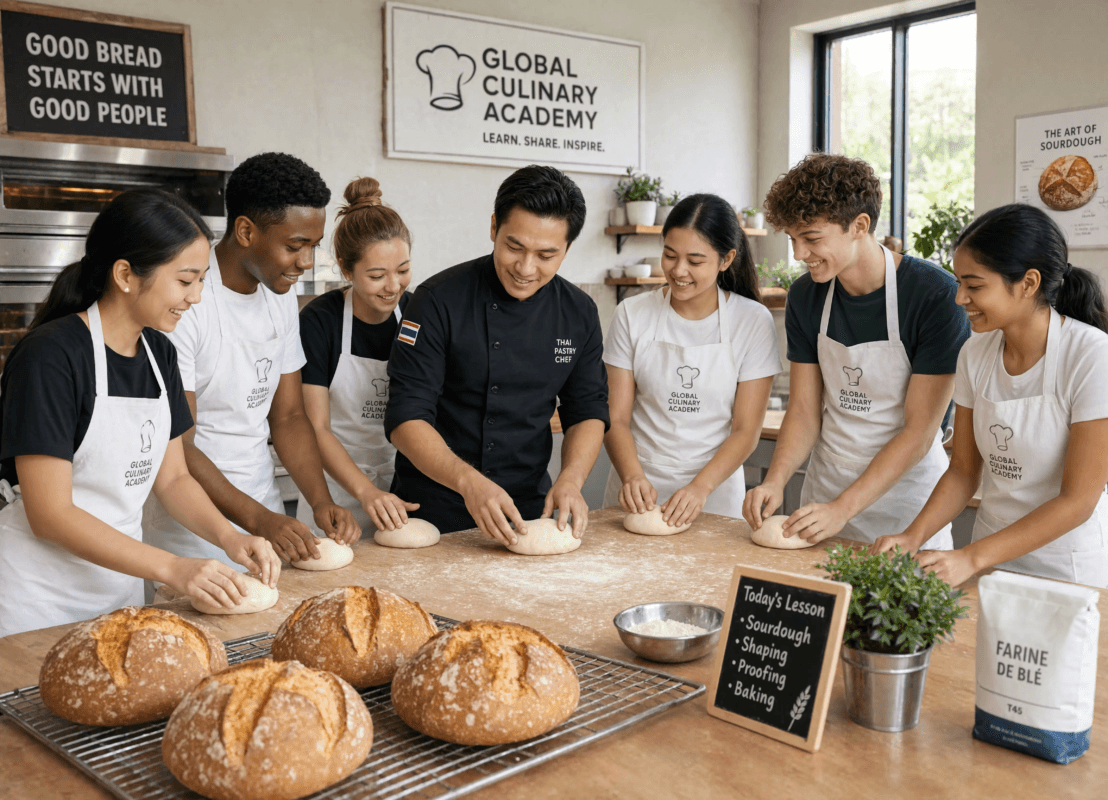
Where to Learn: Bread Training at Bangkok Thai Cooking Academy
Bangkok Thai Cooking Academy’s Pastry and Baking Course places artisan bread firmly within a broader professional curriculum, with dedicated bread and bakery weeks covering everything from sandwich loaves and French bread to croissants, brioche, baguettes, and multigrain formulas. Students can study from one to five weeks, full-time or part-time, learning from experienced pastry chefs in a genuine training-kitchen environment — not a one-off demo class. As a Worldchefs-approved school, the Academy also offers accredited diplomas recognized internationally, giving graduates a credential that carries real weight when applying for roles in hotels, bakeries, or cafés anywhere in the world.
Artisan bread making rewards patience, precision, and repetition — qualities best built through structured, hands-on training rather than trial and error at home. Bangkok, with its unique blend of professional culinary infrastructure, affordability, and challenging tropical climate, offers a genuinely compelling place to build these skills from the ground up. Whether you’re dreaming of opening your own bakery or simply want to master the perfect crusty loaf, exploring a bread and pastry course at Bangkok Thai Cooking Academy is a solid next step toward turning that ambition into a real, professional skill.
